
Chronic Venous Insufficiency Treatment in San Antonio
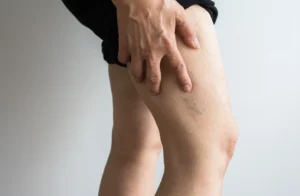 Chronic Venous Insufficiency (CVI) is a progressive condition in which the veins in the legs are unable to return blood to the heart efficiently. It often develops from faulty one-way valves in the veins, which allow blood to pool in the lower extremities. At Pain & Spine Physicians of San Antonio, we offer advanced, minimally invasive treatments designed to relieve symptoms, prevent complications, and restore healthier circulation.
To find out your options, call our office today at (210) 634-1232 to schedule an appointment with our skilled physicians.
How CVI Develops
The veins in your legs form a complex network that works against gravity to return blood to your heart. This system is made up of three main types of veins:
- Superficial veins – These include the great saphenous vein, which runs along the inside of the leg from ankle to groin, and the small saphenous vein, which runs up the back of the calf. These veins lie close to the skin and often become visibly enlarged in cases of varicose veins.
- Deep veins – Located deep within the muscles, these include the popliteal vein (behind the knee) and the femoral vein (in the thigh). They carry the majority of blood back toward the heart.
- Perforator veins – These act as connectors between the superficial and deep systems, allowing blood to move from the superficial veins into the deep veins for more efficient return to the heart.
In healthy circulation, one-way valves inside these veins open to allow blood to move upward toward the heart, then close to prevent it from flowing backward. The calf muscles act like a pump, squeezing the deep veins during walking to help propel blood upward.
When the valves become damaged or weakened, whether due to genetics, prolonged standing, pregnancy, injury, or other factors, they fail to close correctly. This allows blood to leak backward, a condition known as venous reflux. Because gravity is working against the flow, blood begins to pool in the superficial veins.
Over time, this increased pressure stretches and weakens the vein walls, leading to visible varicose veins, swelling, and a sensation of heaviness or aching in the legs. As CVI progresses, it can cause skin changes such as darkening or thickening around the ankles, itching, and inflammation. In advanced stages, the constant pressure and poor circulation can result in open sores called venous stasis ulcers, which can be slow to heal and susceptible to infection.
Classifications
Physicians often classify the severity of CVI using the CEAP system, which evaluates:
- Clinical presentation – Ranging from no visible signs to severe symptoms like active ulcers.
- Etiology – Whether the condition is congenital, primary (developed on its own), or secondary (due to another condition such as deep vein thrombosis).
- Anatomy – Identifying which veins are affected: superficial, deep, or perforator veins.
- Pathophysiology – Determining whether reflux, obstruction, or both are present.
Understanding the specific veins involved and the underlying cause of valve failure is imperative in selecting the most effective treatment plan for each patient.
When CVI Treatment Is Needed
Surgical or interventional treatment is typically recommended when symptoms significantly interfere with daily activities or when complications develop. Indications for treatment include:
- Persistent aching, cramping, burning, itching, or swelling
- Recurrent episodes of superficial phlebitis
- Bleeding from a varicose vein
- Ongoing leg swelling (refractory dependent edema)
- Venous stasis ulcers
- Stasis dermatitis or skin changes from poor circulation
Treatment Goals
The main goal of treatment is to reduce abnormal pressure transmission from the deep to the superficial veins and restore better circulation. Pain & Spine Physicians of San Antonio provides both conservative management and advanced, minimally invasive procedures tailored to each patient’s needs.
CVI Treatment Options at Pain & Spine Physicians of San Antonio
Conservative Medical Treatment
In mild to moderate cases, or when patients are not yet candidates for interventional procedures, conservative therapy is often the first step. This may include:
- Leg elevation helps reduce swelling and promote blood flow back to the heart.
- Graduated compression stockings to support vein function and reduce pooling.
- Wound care for venous ulcers to prevent infection and promote healing.
Minimally Invasive and Surgical Treatments
Thermal Ablation (Radiofrequency or Laser)
Thermal ablation is one of the most effective and widely used treatments for venous reflux.
- Radiofrequency Ablation (RFA) – A specially designed catheter is inserted through a small incision in the thigh and guided near the saphenofemoral junction. The catheter delivers radiofrequency energy, heating the vein wall and causing it to close.
- Laser Ablation – A laser fiber is placed in the vein under ultrasound guidance. Laser energy is then delivered as the fiber is slowly withdrawn, sealing the vein shut.
- Cryoablation – In some cases, extreme cold is used to cause controlled injury to the vein, leading to closure.
Both radiofrequency and laser treatments are performed with perivenous tumescent anesthesia, which numbs the area, protects surrounding tissues from heat, and allows treatment of larger veins (over 12 mm in diameter). These procedures redirect blood flow to healthier veins, relieving symptoms and preventing further complications.
Cyanoacrylate Adhesive Closure (VenaSeal®)
VenaSeal® is an innovative, non-thermal technique that uses a medical adhesive to close the faulty vein:
- A clear, free-flowing adhesive is delivered inside the vein through a small catheter.
- Ultrasound guidance ensures precise placement.
- Manual compression is applied along the treated vein as the adhesive polymerizes, sealing it shut.
- Over time, the body naturally reroutes blood to healthier veins, and the sealed vein becomes fibrotically encapsulated.
One advantage of VenaSeal® is that it does not require tumescent anesthesia or post-procedure compression stockings in many cases. This can make it more comfortable and convenient for patients.
Why Choose Minimally Invasive Techniques?
Both thermal ablation and cyanoacrylate adhesive treatments offer significant benefits compared to traditional vein stripping surgery:
- Smaller incisions and less scarring
- Quicker recovery with minimal downtime
- Reduced discomfort during and after the procedure
- High success rates in closing diseased veins
- Lower risk of complications
The Importance of Early Intervention
CVI is a progressive condition, which means it tends to worsen if not treated. Early diagnosis and treatment can prevent serious complications like ulcers, infections, or permanent skin changes. Prompt intervention also improves comfort, mobility, and overall quality of life.
At Pain & Spine Physicians of San Antonio, we use ultrasound diagnostics to accurately identify the location and severity of venous reflux before recommending a personalized treatment plan.
Contact Us to Get Started with CVI Treatment
Whether you’re just starting to notice symptoms of varicose veins or have been struggling with chronic venous insufficiency for years, our team offers the expertise, technology, and compassionate care needed to help you find relief. We focus on minimally invasive solutions whenever possible, allowing you to resume your normal activities quickly while protecting long-term vascular health.
If you are experiencing leg pain, swelling, heaviness, or visible varicose veins, early treatment can make all the difference. Call (210) 634-1232 or contact us online to schedule your evaluation today.
Educational Videos
Click On The Links Below To Watch Educational Videos


Book An Appointment
Fields Marked With An ” *” Are Required
1804 NE Interstate 410 Loop Ste 101
San Antonio, TX 78217
*This Site Follows The Standards And Practices Of HIPAA Compliance Laws*

© Copyright 2026 Pain & Spine Physicians of San Antonio. All rights reserved.
