
Percutaneous Discectomy
Symptoms and causes that may require disc decompression
Edit When a herniated disc pinches one of the 50 nerves coming out of the spinal cord, it can cause pain, numbness and weakness. The sciatic nerve—which runs from your spinal cord to your leg—is most likely affected. Compression or inflammation of this nerve causes a sharp, shooting pain in the lower back, through the buttocks and down the leg. This is sciatica, and its the most common symptom of a lower back herniation?Text Here
Contact Your physician if you’re exhibiting any of these symptoms:
Leg pain symptoms
- Usually occurs in only one leg
- May starts suddenly or gradually
- May be constant or may come and go
- May get worse when sneezing, coughing or straining during bowel movements
- May be aggravated by sitting, prolonged standing and bending/ twisting
Nerve-related symptoms
- Tingling (“pins-and-needles” sensation) or numbness in one leg
- Weakness in onr or both legs
- Pain in the front of the thigh
Understand what’s causing your pain and get back to living
Contact us to schedule a consultation
Visit strykerIVS.com to find a practitioner in your area
Interventional Spine
Find bibliographic information online at strykerIVS.coro/footnotes. The information presented is for educational purposes only. Stryker is not dispensing medical advice. Only your doctor can make the medical judgment which products and treatments are right for your own individual condition. Your physician will explain all the possible complications of the procedure, as well as side effects. Individual results vary and not all patients will receive the same post-procedure activity level. Stryker Corporation or its affiliates own use, or have applied for the following trademarks or service marks: Stryker. All other trademarks are trademarks of their respective owners or holders.
Stop living with low back pain

Near 10 million men and women suffer from low back pain caused by a herniated disc’
Disc decompresssion can relive yor pain without open surgery.1.2
When pain stops, life can resume
Identify and treat ypur back pain with disc decompression
A herniated disc can negatively affect your ability to perform everyday activities. If your discomfort isn’t improving with conservative treatments—bed rest, pain medication, stretching or cold and/or heat therapy—disc decompression may be your best option. It has a high success rate,1.2 low complication rate, 1.2 and is covered by some private insurers.
Benefits of the procedure
- Significant pain relied
- Reduced use of pain medication
- Return to previous levels of activity
- Less scarrinng
- Quick recovery
- Low complication and norbidity rates
Result compared to Surgery
- Decreased complication rate compared to open surgical discectomy
- Lower re-herniation rate compared to open lumbar discectomy
The procedure and what you can expect
Before
Your doctor uses an imaging study (like an MRI or CT) to confirm a diagnosis. These tests help determine the location of the herniated disc and whether disc decompression is the most appropriate treatment.
If you are a good candidate, your doctor will ask you for the following information:
- current medications, including herbal supplemnts and their dosages
- known drug, iodine, x-ray dye or latex allergies
- current health conditions
A doctor may advise you to:
- abstain from aspirin, ASA- containing products (including Alka-Seltzer or Pepto-Bismol) and herbal remedies for five days before your procedure
- abstain from ibuprofen or other non-steroidal anti-inflammatory drugs (NSAIDs) for three days before your procedure
- abstain from eating or drinking for at least six hours before your procedure, except necessary medications with sips of water
- wear loose-fitting clothes that are easy to take off/put on
- arrange for someone to drive you home
During
Disc decompression happens while you are awake, but sedated. First, a physician numbs your back with a local anesthetic. Then, using x-ray guidance, he or she inserts a small needle inserted through the skin and into the herniated disc. When the probe is in the correct position, the herniated disc tissue is removed, reducing the size of the disc herniation.
After
After the procedure, your vital signs are monitored. Patients usually go home within one to three hours after treatment. For the next three days, you will be advised to apply ice to the treatment area for one to two hours each day and to limit driving, bending, twisting or lifting weight over 10 pounds. Recovery time varies with each person, but many patients resume work and daily activities in one week.
Procedure overview
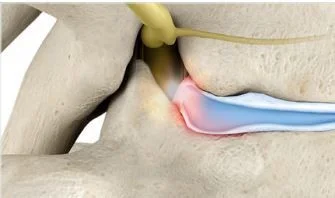
Herniates disc
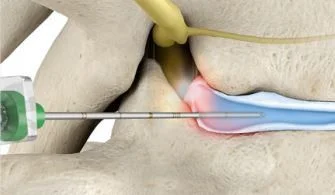
Under x-ray imaging, a needle is guided into the herniated disc, benind the nerve
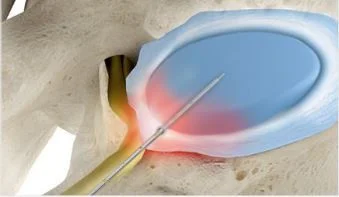
Disc material causing herniation is removed through the needle
Decompressed disc relieves pressure on nerve
Educational Videos
Click On The Links Below To Watch Educational Videos


Book An Appointment
Fields Marked With An ” *” Are Required
1804 NE Interstate 410 Loop Ste 101
San Antonio, TX 78217
*This Site Follows The Standards And Practices Of HIPAA Compliance Laws*

© Copyright 2026 Pain & Spine Physicians of San Antonio. All rights reserved.
